Start with a simple question: what happens in this room on an ordinary day? Breakfast, remote work, reading and an occasional overnight guest make different demands. A flexible interior accommodates the regular activities comfortably and handles occasional ones without allowing them to dominate every decision.
Measure the room in use
A furniture plan drawn with every chair tucked in can hide the most important problems. Mark the table footprint with removable tape, then pull out a real chair and walk behind it. Open nearby cupboards. Carry a laundry basket through the route. These ordinary tests reveal conflicts that a product photograph cannot.
Record door swings, radiators, sockets and changes in floor level. Check the delivery route as well as the final position: narrow stairs and tight corners can rule out a large sofa even when it fits the room. There is no single clearance that works for every household. Mobility aids, children, pets and individual reach all change what is comfortable and safe.
Give each piece a primary job
A bench with storage may solve two problems, but it should still be a good bench. Check seat height, depth and whether the lid can open without moving everything around it. A desk that folds away is useful only if clearing it takes little effort. Otherwise, its nominal flexibility may simply become another daily chore.
An extending table
Test the mechanism yourself. Find out where the extra leaves live, whether the legs move and whether diners can sit comfortably near the extension joints.
Nesting side tables
Use them where occasional guests need a surface. Check that the smaller table is genuinely reachable rather than permanently trapped beneath the larger one.
Storage near the activity
Keep games near the table, blankets near seating and work supplies near the desk. Useful placement often reduces clutter more effectively than additional capacity.
Borrow principles, not a complete look
Nordic furniture history offers many examples of practical economy. Alvar Aalto’s Stool 60 combines a compact form with stackability. Børge Mogensen’s work rewards attention to structure and everyday use. Hans J. Wegner’s chairs demonstrate how joints, curves and support can be visually expressive without unnecessary decoration.
Arne Jacobsen and Poul Kjærholm explored different relationships between silhouette, material and space. None of these designers provides a universal shopping list. A sculptural chair that is uncomfortable for your body is not the right chair for your home. Study how a piece works, then test contemporary, second-hand or locally made alternatives on their own merits.
Distinguish visual lightness from comfort
Raised legs can expose more floor and make cleaning easier, but they do not automatically make a sofa comfortable or durable. A shallow seat can save space while feeling wrong for a taller person. Sit long enough to notice where your feet land, whether your back is supported and how easily you can stand up again.
For modular seating, ask how sections connect and whether replacement covers or components are available. Rearranging a heavy module should not require unsafe lifting. Look at the underside and the fastening points where possible. A system is only flexible if its connections remain reliable after repeated changes.
Make maintenance part of the decision
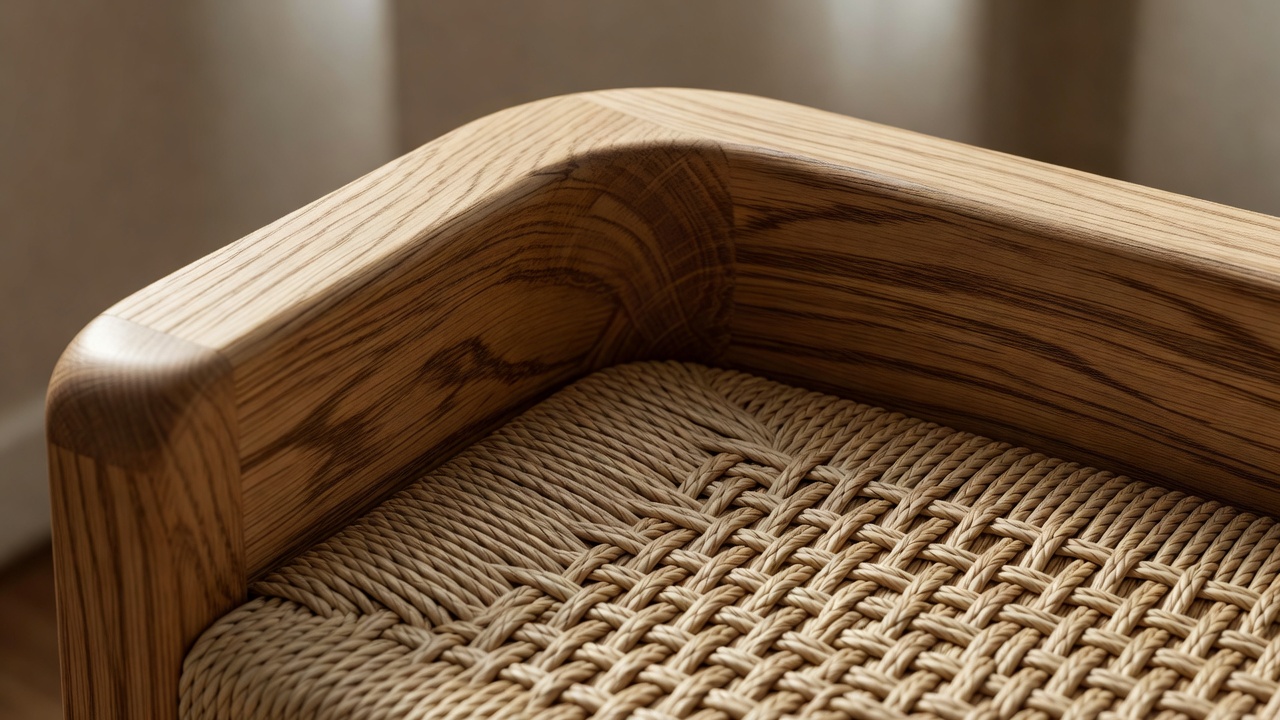
Removable covers are helpful, but “removable” does not necessarily mean machine washable. Read care instructions and consider how fabric behaves around sunlight, food and pets. A natural woven seat has a different cleaning routine from a wipeable upholstered one. Choose a level of care you can realistically maintain.
Second-hand pieces can offer excellent value when construction is sound. Check for loose joints, unstable legs, odours, damaged mechanisms and signs of pests. Upholstered furniture may also be subject to local fire-safety requirements when sold. Do not assume an older item meets current expectations simply because its design is well known.
Begin with one useful adjustment
Before replacing everything, remove one redundant piece and move a useful surface nearer the chair where you actually sit. Notice whether the room becomes easier to use for a week. Then write a short brief for the missing function. “A surface for working twice a week, with room to close the door” is a more reliable starting point than “a smaller desk”.
For design context, the Designmuseum Danmark and Victoria and Albert Museum offer collections that help explain construction and use. Let those examples sharpen your questions rather than dictate your purchases.